What to Do in Saint-Jean-de-Luz
Tips from Your Driver
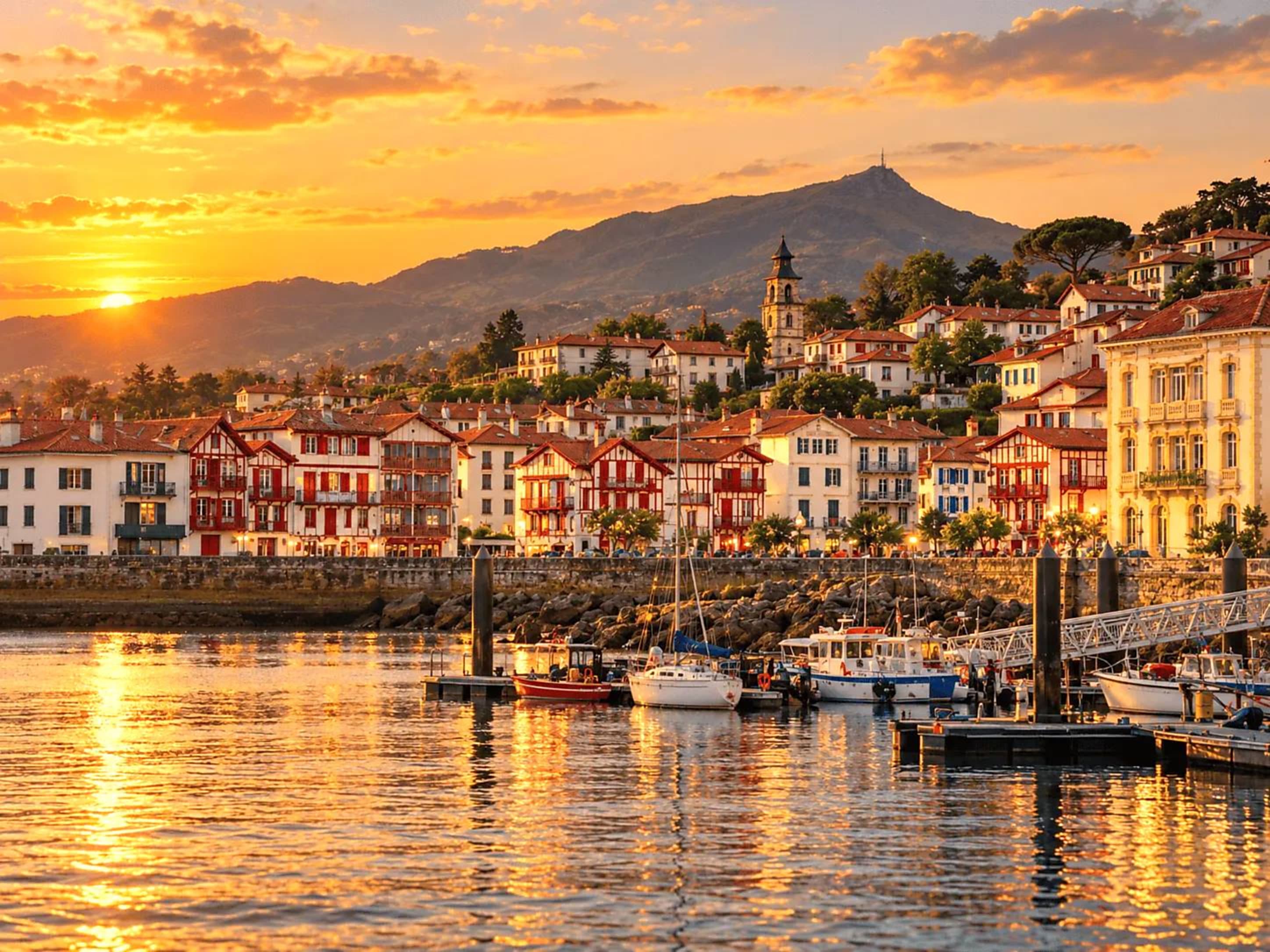
Saint-Jean-de-Luz is a working fishing port with a sheltered bay, a family beach and a pedestrian centre of red and white Basque houses. Louis XIV married the Spanish Infanta here in 1660, and the town still lives around the square that bears his name. It is about 35 minutes from Biarritz Airport, and here is what I recommend to the travellers I drive there. For events and opening hours, the Saint-Jean-de-Luz tourist office is the official source.
Five things not to miss
The fishing port. Colourful boats still land tuna, sardines, anchovies and line-caught hake. Facing the quay, the pink brick and stone towers of the Maison de l'Infante mark the house where Maria Theresa stayed before her wedding.
Place Louis XIV. The heart of town, shaded by plane trees, with café terraces and a bandstand. From Easter to All Saints' Day, there is music on the bandstand every Sunday at 11:30.
Maison Louis XIV. A shipowner built it in 1643, and the young king stayed here for 40 days in 1660. The same family still lives in it. It opens to visitors from April to early November; check the days and times on its website.
Saint-Jean-Baptiste church. The royal wedding took place here on 9 June 1660. Look up at the 17th-century altarpiece. Basque choirs and classical concerts are held here all year round.
The Grande Plage and its promenade. Three breakwaters keep the water calm, which makes it a good beach for young children. Walk the Jacques Thibaud promenade, past the red-shuttered houses and their little footbridges, to the Pergola, built by the architect Mallet-Stevens in 1927.
Across the harbour: Ciboure and Socoa
Cross the bridge over the Nivelle and you are in Ciboure, the quieter twin town. Its Basque name, Ziburu, means "bridgehead".
Quai Ravel. Red and green Labourdine houses line the quay. One of them, a 17th-century shipowner's house, is where the composer Maurice Ravel was born.
The Sunday market. From 8:30 to 12:30, local food stalls fill the street that leads to the fronton, the pelota wall.
Thursday pintxo-pote. On Thursday evenings, the bars around the fronton serve a pintxo with each drink. People come from the surrounding villages for it.
Socoa fort. Built under Louis XIII and reworked by Vauban, it guards the western entrance to the bay. The inside is closed, but you can walk around it. When the sea is calm, the Socoa seawall gives one of the finest views of both towns, with the Pyrenees behind.
The tourist office's page on Ciboure lists the market and the week's events.
Beyond the bay
The Basque Corniche. A 10-kilometre cliff path runs from Ciboure to Hendaye, above layered flysch cliffs up to 45 metres high. Most of it lies in Urrugne. With some luck, you may spot Belharra, a giant wave that only professionals surf. The tourist office has a page on the Corniche.
The wild coast. North of town, the beaches of Erromardie, Lafitenia, Mayarco and Senix are quieter, and surfers love them.
The villages inland. Ascain and Sare sit at the foot of La Rhune, the mountain you see behind the port. Guéthary, on the coast towards Biarritz, is a small village facing the ocean.
San Sebastián. Across the border, read our tips for San Sebastián.
When to go
Late June The Fêtes de la Saint-Jean, four days of celebrations when the whole town dresses in red and black.
Summer On Wednesday and Sunday evenings during the summer holidays, the toro de fuego, a 15-minute fireworks show, lights up Place Louis XIV.
Late August The Ravel festival of classical music traditionally opens on the last Sunday of August with the Messe des Corsaires, the Privateers' Mass, in Saint-Jean-Baptiste church.
Spring and autumn Calmer streets, quieter terraces, and the Maison Louis XIV open until early November. The Halles covered market runs all year on Tuesdays and Fridays, and on Saturdays too in July and August.
A perfect day
Morning The Halles (on a Tuesday or Friday, local producers set up outside), then the fishing port and the Maison de l'Infante.
Late morning Saint-Jean-Baptiste church and a visit to the Maison Louis XIV.
Lunch Fish on a terrace near the port or on Place Louis XIV.
Afternoon The Grande Plage, the promenade to the Pergola, then the shops of Rue Gambetta.
Evening Sunset from Sainte-Barbe, or dinner across the harbour on Quai Ravel in Ciboure.
Getting there from Biarritz
From Biarritz Airport, the drive to Saint-Jean-de-Luz takes about 35 minutes. With a private transfer from Biarritz Airport to Saint-Jean-de-Luz, your driver tracks your flight, meets you on arrival (here is how it works) and drops you at your door, whether your hotel is on Place Louis XIV, by the Grande Plage or on the Sainte-Barbe headland. Tolls are included, child seats are fitted on request, and you pay at the end of the ride, by card or in cash.
Arriving by train? The same service runs from Biarritz train station to Saint-Jean-de-Luz, in about 30 minutes (our station tips). Staying elsewhere on the coast? See all our transfers from Biarritz Airport.